


In our latest episode we hit on a hard truth: no one is sitting around waiting for your book.
Here’s the thing—tens of thousands of books get published every month. Your book baby, the one you poured your heart into for months or years, is competing for attention in an incredibly crowded marketplace.
So if your sales are disappointing, you’re not alone. And more importantly, you’re not stuck.
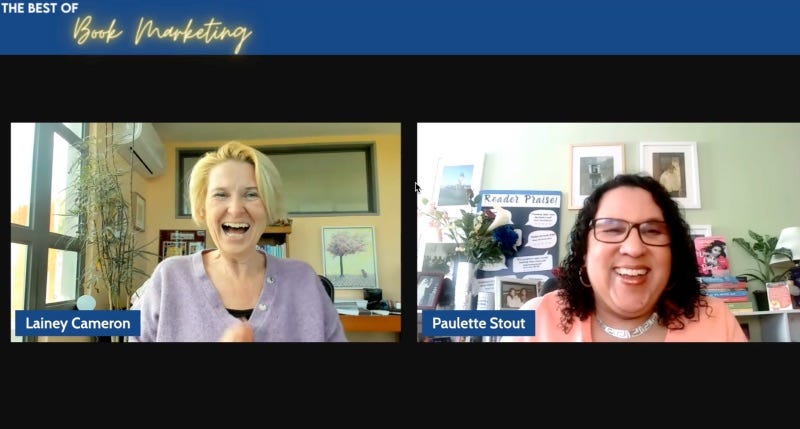
In Episode 207 — Book Marketing Tips for Slow Book Sales— we break down exactly how to diagnose slow book sales.
Here’s your roadmap below!
Also, Lainey Cameron shared that registration is open for her 12 Weeks to Book Launch Success program where she helps authors create their successful book launch plan. The next group starts March 1st. Perfect if you want your book launch right from the start!
Start With the Biggest Issues First
When your book isn’t selling, it’s tempting to fixate on the wrong things. You might obsess over keywords when your real problem is a homemade-looking cover. Or you might keep tweaking your pricing when the actual issue is that you’re not marketing at all.
The key is to tackle problems in order of impact.
Question 1: Is It the Book?
This is the hardest question to face, but it’s where to start.
Look at your review score. If it’s solidly 3.5 or below, you might have a quality issue.
Skip the 1-stars (too biased—often people who hate your genre entirely) and the 5-stars (lovely, but not diagnostic). The middle reviews are where you’ll find patterns. Be brave! Read your 2-star and 3-star reviews carefully.
Are multiple reviewers mentioning slow pacing? Confusing plot? Unlikeable characters? If three or more people point out the same issue, that’s data.
But here’s the catch: If you only have one book published, don’t immediately dive into revisions. Your time is probably better spent writing books two and three. You’ll be a better writer by then anyway, and you can loop back to fix book one once you have a stronger catalog.
Question 2: Is It Your Cover?
If your book has solid reviews, but still isn’t selling, your cover is the next most likely culprit.
Here’s a quick test: Screenshot the top 20 books in your Amazon category. Put your cover in a grid with them at thumbnail size. Show this to 10 people (not family—actual readers or authors) and ask which covers they’d click on first.
Professional covers aren’t cheap ($300-800 typically), but this is one of the most fixable problems with the biggest impact on sales. A new cover can give an old book completely new life.
Your cover needs to do two things: fit your genre’s visual conventions and stand out just enough to catch the eye. It’s a delicate balance, but genre readers make snap judgments in about two seconds. If your cover doesn’t send the right signals, they keep scrolling.
Question 3: Is Your Blurb Working?
Your book description works 24/7 as your salesperson.
Common blurb mistakes include:
Boring first sentence (starts with backstory instead of a hook)
Too many characters introduced (readers can’t keep track)
Too long (keep it 150-250 words)
Plot summary instead of compelling teaser
Accidentally signaling the wrong tropes
Here’s a pro tip: Paste your blurb into ChatGPT or Claude AI and ask, “What tropes and genres does this book description suggest?” If the answer doesn’t match your actual book, you’ve got a blurb problem.
Question 4: Are You Actually Marketing?
This is where a lot of authors get stuck. They think they’re marketing, but when you dig deeper, they posted on Instagram twice last month and sent one newsletter three months ago.
Ask yourself these three questions:
Did I spend any money on marketing in the last 30 days?
Did I reach anyone outside my existing network in the last 30 days?
Can I name three specific marketing activities I did this week?
If you answered no to any of these, you’re not really marketing—you’re hoping. And hope, my friend, is not a strategy.
Real marketing means consistently putting your book in front of new potential readers through ads, promotions, newsletter swaps, content creation, or events. It also means tracking what works and doing more of that.
The good news: You don’t have to do everything. Pick 2-3 marketing areasthat work for your genre and that you don’t absolutely hate, and show up consistently.
The Supporting Cast: Categories, Keywords, and More
Once you’ve addressed the big four (book quality, cover, blurb, and actual marketing), here are the next issues worth checking:
Categories and keywords: Are you in specific enough categories? Being #5 in “Time Travel Romance” beats being #5,000 in “Romance.” You get 3 categories on Amazon for books and 3 for ebooks—use them strategically.
Ideal reader clarity: Can you describe your ideal reader beyond “women 25-45 who like books”? The more specific you get, the more targeted your marketing can be.
Pricing: Are you priced in line with comparable books in your subgenre?
Word count: Is your book significantly shorter or longer than genre norms?
POV: Are you writing in an unconventional POV for your genre?
These issues can all create friction with readers.
When to Move On
Sometimes, the best thing you can do for a slow-selling book is write your next one.
If you’ve been actively promoting a book for 6-12 months with a professional cover, solid blurb, strategic marketing, and it’s still not gaining traction, it might be time to shift your energy.
Not every book will be a commercial success. Even bestselling authors have books that underperform. What separates successful authors from those who quit is simple: they keep writing.
Each new book you publish creates a sales lift for your backlist. Readers who discover you through book three often go back and buy books one and two. The economics completely change when you have multiple books.
Your Next Steps
If your book isn’t selling, don’t spiral. Diagnose.
Work through the checklist in order. Fix the big problems before you obsess over the small ones.
And remember: slow sales don’t mean you’re a failure as an author. They’re data points telling us something needs to adjust. Approach this compassionately. Test, learn, and keep writing.
Your next book might be the one that takes off. But you’ll never know if you give up now.
Want the full breakdown? Listen to Episode 207 of the Best of Book Marketing podcast where Paulette and Lainey dive deep into each of these topics with specific examples and action steps.
Find it now on:
Our Episode Page with full transcript!
What’s been your biggest challenge with book marketing? Let us know—we readevery response, and your question might become our next episode topic!
Lainey Cameron & Paulette Stout
Lainey Cameron and Paulette Stout host The Best of Book Marketing Podcast, where they have real conversations about what actually works in book marketing—no fluff, just honest advice from authors who’ve been there.
Another great episode! Lainey, I’ll see you in Alexandria. Paulette, I’ll see you at Liberty States. Unfortunately, I’ll be presenting at the same time as you 😉
I've yet to listen to the episode, but even just running a diagnostic on my book through the steps you've mentioned has been super beneficial for me! I definitely need to create a marketing strategy and not just rely on hope and the occasional mention of my book 😅 Thank you for sharing this!!