


Ask most authors what their author brand is, and they’ll tell you about their color palette. Maybe their logo. Their social media grid.
Those things matter. But they’re not your brand.
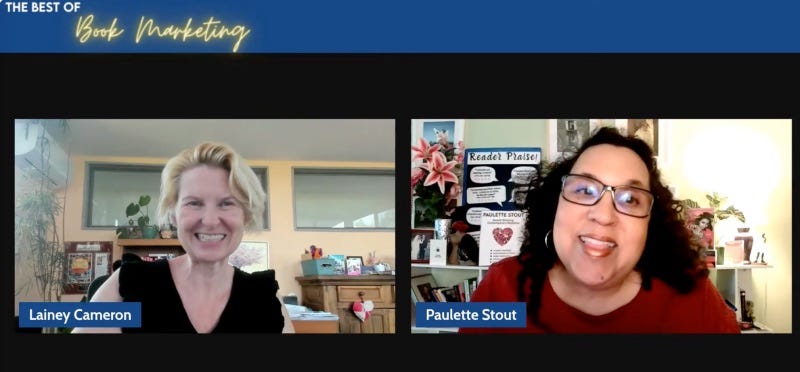
Today we released Episode 211: Building Your Author Brand and Platform. Here are eight points from our conversation that we think are worth your time.
1. Your brand isn’t your color palette.
Colors and fonts are expressions of your brand — important ones, but brand is the emotional contract you make with readers every time they encounter you or your work.
The feeling someone has when they finish one of your books, close their laptop after reading your newsletter, or walk away from your signing table.
2. Before you choose a single font or hex code, answer this question.
What emotional experience am I promising my reader?
Not the plot. Not the genre. The experience. Are you promising comfort? Hope? The edge-of-your-seat rush of not knowing what happens next?
Your answer — the promise of a particular type of reader experience — is the foundation for everything else. The visuals just give it a face.
A few useful questions for figuring out your promised of emotional experience:
• When your ideal reader finishes one of your books, what do you want them to feel?
• What are the 2–3 emotions your writing most reliably delivers?
• If someone described your books to a friend, what words would you hope they used?
• Which 3 words do you want people to associate with you as an author?
3. Build your brand to last over time.
One of the most common mistakes we see: authors building their entire brand identity around their debut cover. It makes sense in the moment — you finally have this beautiful cover and you want everything to match. But what happens with your second book? Your third?
Your brand needs to carry you through the next years. Build it around the emotion of your promise, not a single book cover.
4. When you have a new or updated emotional promise — it may be time for new colors.
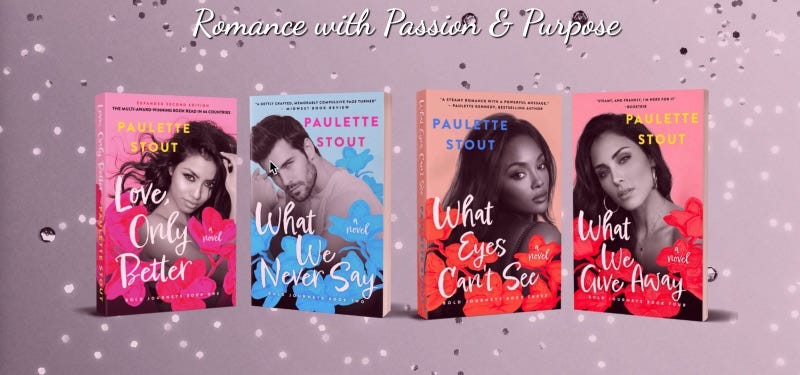
Paulette Stout is a great example of this. When she moved her brand from women’s fiction into romance, she changed her entire palette from navy, gold, and white to hot pink, black, and white. That wasn’t a visual refresh for its own sake — it was a deliberate realignment with a new reader promise. The colors weren’t chosen because they were pretty. They were chosen because they communicated the right emotions and genre.
5. Consistency matters more than perfection.
This is the one Lainey repeats most often in her group program for book marketing, 12 Weeks to Book Launch Success. People won’t necessarily be able to articulate why a consistently branded author feels more professional — they’ll just sense it.
Consistency signals that you take your work seriously. It signals that what’s inside the book probably reflects the same care as everything else. Pick something that feels right and show up with it everywhere for twelve to twenty-four months minimum, preferably longer.
6. Choose colors that signal emotions — not just ones you like.
Once you know your emotional promise, color choices become much more straightforward.
Happy, uplifting reads tend toward warm tones — yellows, pinks, peaches, soft oranges. Thrillers and darker reads lean into cool, high-contrast palettes — blacks, deep blues, sharp reds.
Calming literary fiction often lives in soft blues, greens, and muted tones. Energizing commercial fiction does well with teals, turquoises, and bright accents.
You an start there, then use a free palette generator like Colormind, Colors.io, or similar to build out a full set of complementary colors around your primary one. You could also hire a designer, but it’s not essential if you don’t have the budget.
7. Your brand shows up in every touchpoint with readers.
Look at your website, newsletter, social media, bio, and author photo and ask: does this use consistent colors and communicate the same promise of reader experience?
You don’t have to overhaul everything at once. Pick the most visible thing (perhaps your website), and align it first, then work outward.
8. You are your brand — and every interaction is a brand moment.
Your author photo. How you show up at events. The tone of your newsletter. How you engage with readers in the comments.
Every touchpoint is a brand moment, and every brand moment is either reinforcing or undermining the promise you’ve made.
The authors who do this well make it look effortless — it’s always the same person, the same emotional tone, the same promise. That consistency is what makes a brand feel strong and memorble.
And the good news is you don’t have to be a different person - be yourself and over time readers will get to know that as your brand!
Listen to Episode 211: Building Your Author Brand and Platform, where we go into all of this!
Find it now on:
Our Episode Page with full transcript!
Does this resonate with you? Let us know your thoughts!
Recent Episodes:
10 Things We Wish Every Author Knew About Their Website

We recently recorded what one of our most practically useful episodes yet — Episode 209: How to Build an Author Website - a full deep dive on author websites.
Lainey Cameron and Paulette Stout host The Best of Book Marketing Podcast, where they have real conversations about what actually works in book marketing—no fluff, just honest advice from authors who’ve been there.
You are so welcome! I’m glad it was helpful.
Valuable resources and a great article. Will read more going to the links. Thank you so much for this. Dita