

The TRAIT System: 5 Elements Every Successful Book Cover Needs
Our new Episode with Book Cover Design Expert, Damon Freeman

You’ve spent months or years crafting the perfect book. Every character arc is polished, every plot twist lands just right. But if your book cover doesn’t do its job in the first few seconds, none of that matters.
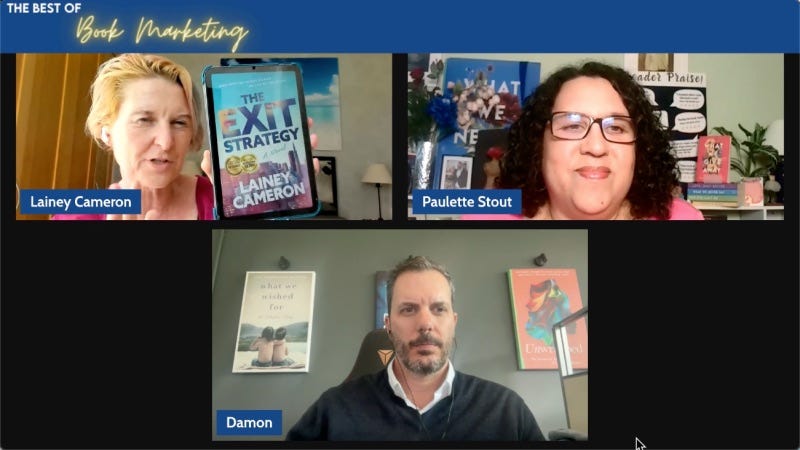
In our latest episode of The Best of Book Marketing podcast, we get book cover design tips from Damon Freeman, the founder and Creative Director of Damonza design agency
Damonza is also the talented team that just remade the cover of
‘s debut, The Exit Strategy. You’ll get behind-the-scenes details on Lainey’s experience re-covering her book so you can choose a cover that’s right for your book or give useful feedback to your designer.Find Episode 204, Book Cover Design Tips with Damonza on:
Our Episode Page with full transcript (if you prefer to read)
What You’ll Learn in This Episode
Your Cover Has Exactly One Job
“The cover, all the cover has to do is to get someone to click on it or pick it up. That’s it,” Freeman explained. “Because after that, the description and the Amazon page or the blurb on the back—that’s the next job.”
Your cover isn’t a synopsis—it’s a billboard designed to create curiosity and generate clicks. So no need to tell your entire story on the cover.
Most authors get this backwards. They want to show the necklace AND the park AND the hummingbird AND the romantic tension all in one image. The result? A cluttered, confusing cover that makes readers scroll right past.
The TRAIT System: What Actually Makes Covers Work
Damon breaks down effective covers into five essential elements he calls TRAIT:
Tone: Does it look like your genre? For example, romance readers expect different visual cues to thriller readers.
Relevance: Are the elements actually related to your story?
Attractiveness: An ugly cover turns readers away before they even read your title.
Interest: Will it catch the eye as someone scrolls on an Amazon page with 20 other books?
Typography: This is where most self-published covers fail spectacularly.
That last point deserves special attention. “Typography is one of the aspects where it can make or break a cover, and it’s probably the most common part of a cover where self-published authors may struggle,” Damon told us. Using Times New Roman or Comic Sans immediately signals “amateur” to readers. Plus, the text should integrate seamlessly with your image, not sit awkwardly separate from it.
Before and After - Lainey’s New Cover

Who You Test with Matters
Co-host
shared an experiment from her recent cover redesign (see the before and after below!). She tested three potential covers using Facebook ads targeted to women’s fiction readers. One cover performed three times better than the others—clear winner, right?Not so fast.
When she tested the same covers with her 8,000 newsletter subscribers, the results flipped completely. The Facebook “winner” scored only 15% with her actual readers, while a different cover captured 55% of their votes.
The lesson? Your audience isn’t “everyone in your genre”—it’s the specific people who connect with your voice and style. Generic demographic targeting might lead you astray from what your real readers actually want.
When It’s Time to Start Over
Sometimes the hardest decision is admitting your current cover isn’t working.
Warning signs include:
Low click-through rates on your ads
Repeated BookBub rejections (often it’s the cover)
Sales consistently below expectations
You’re embarrassed to promote your own book
Damon sees this constantly: “Most 90% of the people that are submitting their covers for review already know that it’s not right. You know, that’s why they’re submitting it for the review.”
Trust that instinct. Cover trends evolve, and what worked three years ago might be invisibly sabotaging you now.
Your Story Deserves Your Best
A key lesson from this episode — the cover design process isn’t about just personal preferences or artistic expression. It’s about communication with your target market.
Study successful books in your exact subgenre. Learn their visual language. Then use that knowledge to help your ideal readers find you.
Essential Resources:
Free Book Cover Review from the team at Damonza
Damonza’s Genre Cover Trend Guides
Learn more about The Exit Strategy
The Exit Strategy by Lainey Cameron
Who says the other woman has to be the enemy?
The empowering feminist page-turner you didn’t know you needed.
Readers call it ‘fresh, addictive, and deeply satisfying’.
Winner of 15 book awards including American Fiction Awards, Chanticleer Somerset Award for Literary & Contemporary fiction, National Indie Excellence, Readers’ Favorite, and more!

I watched the replay -- and then later had a follow-up video call with Damon! So much to think about. Tku for sharing; it is spot-on and helpful.
This was so timely - doing this right now. So helpful!!